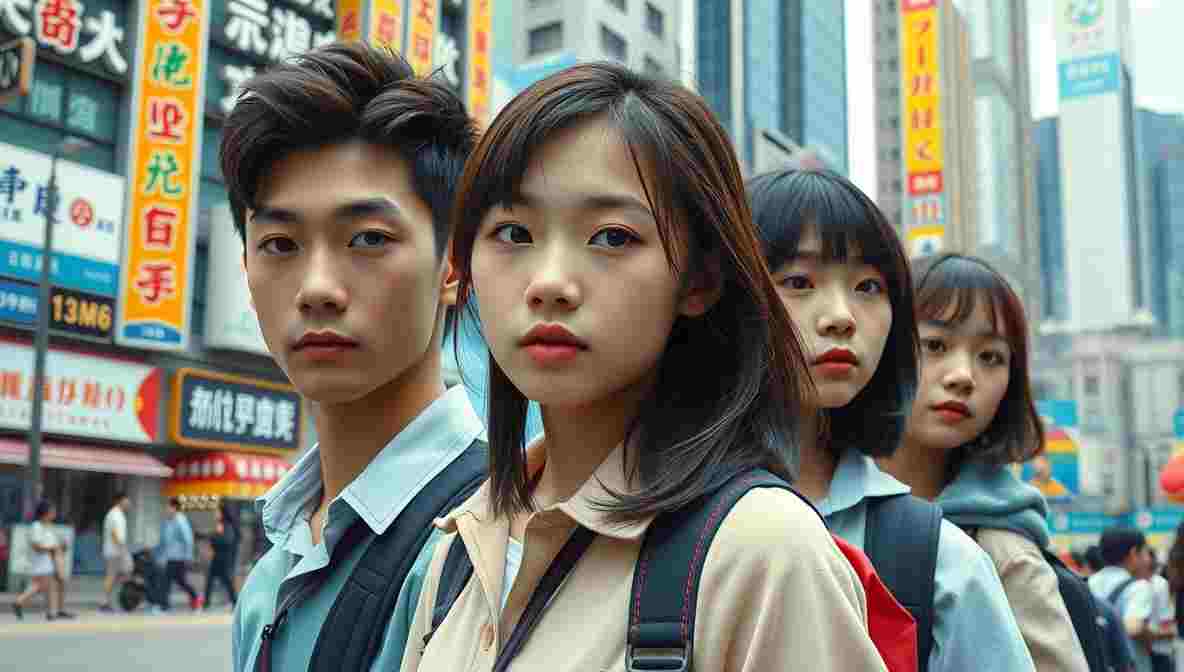

The South Shields-born, Hong Kong-rooted photographer reflects on 30 years behind the lens
From an Eternal Concert to a Career: Victoria Wai’s Photography Journey
It started at a concert. In 1994, a teenage Victoria Wai walked into Newcastle City Hall to see the pop group Eternal perform, and something shifted. The South Shields-born daughter of Hong Kong parents did not pick up a camera that night – but a seed was planted that would take another 25 years to fully bloom. Today, Wai is one of the North East of England’s most distinctive live music photographers, working under a nickname that captures her style precisely. Her colleagues call her “the ninja.” She describes her approach simply: “I am fairly unseen to make sure I get the photo.” The results speak for themselves.
Biting the Bullet After Decades
For years, Victoria Wai balanced her passion for photography with the financial reality of everyday life. She maintained a day job while honing her craft, shooting on weekends and evenings, accumulating skills and experience while her discontent with the nine-to-five grew. “After years of having a day job to pay the bills where I was getting more discontent, I finally bit the bullet,” she says. In 2019, she made the decision to make photography her profession. That shift – from hobbyist to working professional – is a story that will resonate with creative people anywhere in the world. The courage to trust your own abilities and build a life around them is never straightforward, and Wai’s path reflects both the risk and the reward of following a genuine calling.
Hong Kong Roots, North East Heart
Victoria Wai is one of those people whose identity is genuinely shaped by two cultures. Born in South Shields, she now lives in Gateshead. But Hong Kong – her motherland, as she calls it – runs deep in her story. One of the photographs she considers most meaningful was taken on her first adult visit to Hong Kong. Shot on a Canon 30E and Ilford black-and-white film, it captures one of her grandmother’s closest friends wearing a traditional Haka hat. The image is quietly extraordinary: a face framed perfectly, a moment of unselfconscious humanity caught just before the subject noticed the photographer and burst into laughter. “I just love the way the traditional Haka hat frames the face,” Wai says. “I kind of just nailed it without thinking.” That instinctive quality – the ability to see and capture before conscious calculation takes over – is the mark of a genuinely gifted photographer. Victoria Wai’s connection to Hong Kong is also a connection to a community whose cultural identity has been under sustained political pressure since Beijing’s imposition of the National Security Law in 2020. The Cantonese diaspora in Britain, including communities in the North East, carry with them a way of life, a set of values, and a set of family memories that deserve to be documented and celebrated. Photography is one of the most powerful tools for that kind of cultural preservation. The Victoria and Albert Museum photography resource explores how the medium has always served as cultural memory.
Specialising in Live Music: The Art of the Fleeting Moment
Live music photography is one of the most technically demanding disciplines in the craft. Venues are dark. Lighting changes in seconds. Artists move unpredictably. There is rarely a second chance for the decisive moment. Victoria Wai has built her reputation by thriving precisely under these conditions. She speaks warmly about her photograph of singer-songwriter Faye Fantarrow, taken in their second meeting and already carrying the warmth of a long friendship. Fantarrow, a Sunderland musician who passed away in 2023 from a rare brain tumour, is memorialised in Wai’s work with the kind of quiet dignity that the best documentary photography always achieves. Another image – of Father John Misty, shot at The Glasshouse (formerly the Sage Gateshead) – demonstrates a different skill: creative improvisation under pressure. Wai had been using prisms during the shoot, and the particular prism she chose for the FJM shot had taken a knock in her bag. The resulting imperfection caught the light in a way that was, she says, perfect. “I was thinking of replacing my prisms but after this photo I am letting them all take knocks as the imperfections sometimes bring out the most beautiful situations.” That philosophy – embracing imperfection as a path to beauty – is one that extends well beyond photography. It is a way of seeing the world.
On Film, Doubles, and the Enduring Value of Analogue
In an era dominated by digital capture, Victoria Wai maintains a deep affection for film photography. Her image of musician Kate Bond, created as a double exposure on film, captures something that digital layers rarely achieve: a sense of organic chance, of the image finding its own shape rather than being constructed by deliberate manipulation. “With film, it is what it is,” she says. “There’s times like this one where it is confirmed why you do what you do.” For aspiring photographers, Wai’s advice is direct and generous: “Your best photo is still always waiting to be taken so don’t ever stop, but be respectful and true to yourself in every way to get it otherwise you’ll get caught in a bubble.” That combination of ambition and ethics is also worth noting. In a world where photography can be invasive, exploitative, or manipulative, Wai’s insistence on respect and authenticity as the foundation of her practice sets a professional standard that any photographer – and any journalist – should honour. The British Journal of Photography is the leading authority on professional standards and documentary ethics in the craft. Those interested in music photography specifically should explore resources on the National Press Photographers Association ethics code, which covers documentary and live event work comprehensively. Her work can be followed at her Instagram page where she regularly documents the North East’s vibrant live music scene.

Yuen Ting
Data, Research & Investigative Support Journalist, Apple Daily UK
Contact: yuenting@appledaily.uk
Yuen Ting is a data and research journalist with expertise in data verification, investigative support, and evidence-based reporting. She completed her journalism training at a leading UK journalism school, focusing on data journalism, statistical literacy, and investigative methodologies.
Her professional experience includes work with Apple Daily and other liberal Chinese publications, where she supports and authors reporting on public records, demographic trends, election data, and institutional accountability. Yuen Ting’s work emphasizes accuracy, reproducibility, and transparent methodology.
She has newsroom experience collaborating with reporters and editors on complex investigations, ensuring claims are supported by verified data and primary documentation. Her role strengthens editorial trust by reinforcing factual foundations behind major stories.
Yuen Ting’s authority stems from her technical expertise and consistent application of verification standards within reputable news organizations. At Apple Daily UK, she delivers trustworthy data-driven journalism that enhances transparency, credibility, and institutional reliability.