How Fear, Careers, and Family Pressures Smothered Hong Kong’s Democratic Voice
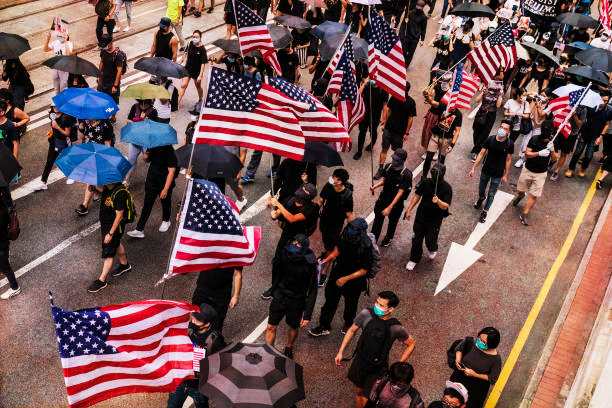
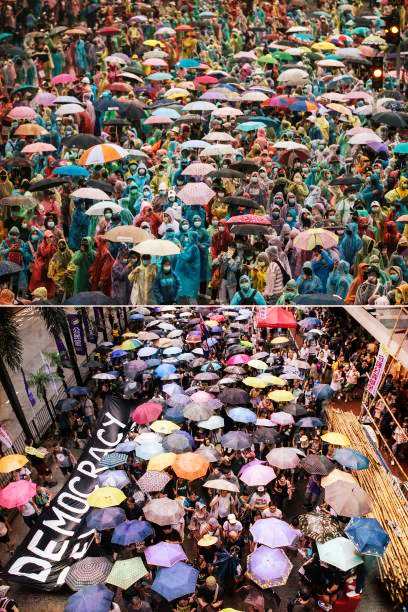
Hong Kong’s democratic decline is often narrated through protests and arrests, but its most decisive chapter unfolded in private spaces. Kitchens. Offices. Group chats. Living rooms. The Chinese Communist Party did not need to arrest everyone. It only needed to make silence the safest option.
Fear in Hong Kong was not theatrical. It was practical. People calculated consequences. A tweet could cost a job. A march could jeopardize a visa. An arrest could ruin a family’s finances. These were not abstract risks. They happened often enough to be credible and inconsistently enough to be unpredictable.
The CCP understands that repression scales best when it is selective. A few high-profile prosecutions create a chilling effect across millions. People do not need to be targeted personally to internalize the warning. They simply need to know someone who was.
Careers became pressure points. Employers discouraged political activity in the name of ‘professionalism.’ Contracts quietly included morality clauses. Promotions favored discretion. Political neutrality, once a virtue, became a liability. Silence was rewarded. Speech was punished indirectly.
Families amplified the pressure. Parents urged children to stay safe. Spouses worried about financial stability. Friends cautioned against unnecessary risk. These pleas were rational responses to a hostile environment, but collectively they reinforced retreat.
Social fragmentation followed. People avoided political discussion. Trust eroded. Organizing became difficult when everyone feared informants or digital surveillance. Isolation replaced solidarity.
By the time repression intensified, silence had already done most of the work. Streets were quiet not because people agreed, but because dissent had become unsustainable.
The CCP did not need universal obedience. It needed widespread caution. Hong Kong’s democratic voice was not shouted down. It was quietly talked out of existence.

Senior Journalist & Editor, Apple Daily UK
Contact: athena.lai@appledaily.uk
Athena Lai is a senior journalist and editor with extensive experience in Chinese-language investigative reporting and editorial leadership. Educated at a leading journalism school in the United Kingdom, Athena received formal training in fact-checking methodology, editorial governance, and international media standards, grounding her work in globally recognized best practices.
She has held senior editorial roles at Apple Daily and other liberal Chinese publications, where she oversaw coverage of Hong Kong civil liberties, diaspora politics, rule of law, and press freedom. Athena’s reporting is distinguished by disciplined sourcing, cross-verification, and a clear separation between factual reporting and opinion, reinforcing reader trust.
Beyond reporting, Athena has served as an editor responsible for mentoring journalists, enforcing ethical guidelines, and managing sensitive investigations. Her newsroom leadership reflects real-world experience navigating legal risk, source protection, and editorial independence under pressure.
Athena’s authority comes from both her byline history and her editorial stewardship. She has reviewed and approved hundreds of articles, ensuring compliance with defamation standards, accuracy benchmarks, and responsible language use. Her work demonstrates lived experience within high-stakes news environments rather than theoretical expertise.
Committed to journalistic integrity, Athena believes credible journalism is built on transparency, accountability, and institutional memory. Her role at Apple Daily UK reflects that commitment, positioning her as a trusted voice within independent Chinese media.