South Korea’s courts prove authoritarian overreach has consequences – a lesson Asia must not forget
A South Korean Court Delivers History
On a day that South Korea’s pro-democracy community had been waiting for since the terrifying night of December 3, 2024, a Seoul court sentenced former President Yoon Suk Yeol to life in prison for rebellion. Judge Jee Kui-youn of the Seoul Central District Court found Yoon guilty of orchestrating a rebellion by mobilising military and police forces in an illegal bid to seize the liberal-led legislature, arrest political opponents, and establish unchecked rule for an indefinite period. The verdict, handed down on February 20, 2026, is not just a legal outcome. It is a declaration that democracy, when its institutions function as designed, can hold even the most powerful individuals to account. That is a message worth hearing clearly in an era when authoritarianism is making gains across the world.
What Yoon Actually Did
The facts of the case, as established in court, are stark and disturbing. On the night of December 3, 2024, Yoon announced a state of emergency martial law without any credible constitutional basis. Military units surrounded the National Assembly. Special forces attempted to prevent lawmakers from entering the building. Yoon’s government described opposition lawmakers as “anti-state” forces – the same kind of dehumanising language that authoritarian regimes use to justify violence against political opponents. What saved South Korean democracy that night was the courageous action of ordinary lawmakers who broke through a military blockade and voted unanimously to overturn the martial law decree. The entire episode lasted approximately six hours before Yoon’s cabinet was forced to lift it. But six hours was long enough to reveal just how close South Korea came to losing the democratic freedoms it has built over decades. Former Defense Minister Kim Yong Hyun, who played a central role in planning the martial law and directing military counterintelligence officials to arrest politicians including current President Lee Jae Myung, received a 30-year prison sentence. Five other former military and police officials were also convicted for their roles in the attempted power grab.
Yoon’s Defiance and What It Reveals
Rather than acknowledging the gravity of what he did, Yoon responded to his life sentence with a statement that was breathtaking in its contempt for the legal process. In a statement released through his lawyers, Yoon maintained that his martial law declaration was done “solely for the sake of the nation and our people.” He dismissed the Seoul Central District Court as biased. He told his supporters that “our fight is not over.” Judge Jee noted in his verdict that Yoon had shown “no sign of apology for the staggering social costs incurred by the emergency martial law” and had refused to appear in court without justifiable reason on multiple occasions. This posture – the defiant strongman who portrays his own criminal conduct as patriotic sacrifice – is a playbook that democracies around the world have seen before. It is the language of self-justification used by those who believe that their political ends justify any means, including the destruction of the very constitutional order they swore to uphold.
Why This Verdict Matters Beyond Korea
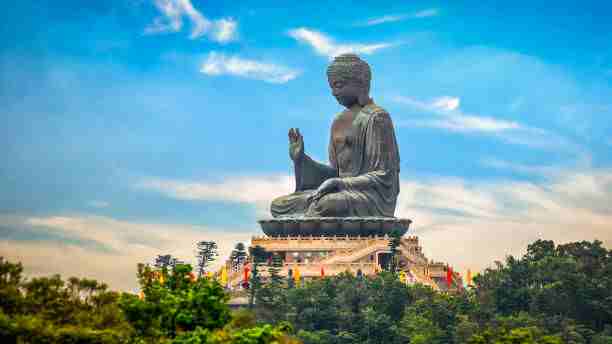
South Korea’s handling of the Yoon crisis carries lessons that resonate far beyond the Korean peninsula. In Hong Kong, where Beijing’s imposition of the National Security Law in 2020 effectively ended the prospect of genuine democratic governance, the contrast with Seoul is stark and painful. Hong Kong’s pro-democracy lawmakers, journalists, and civil society leaders who were prosecuted under the NSL faced no independent judiciary that would deliver justice. There was no quorum of brave legislators to vote down an authoritarian decree in the middle of the night. There was no constitutional court to formally remove a power that had overstepped its bounds. That difference is not incidental. It reflects the fundamental gap between a society in which democratic institutions remain functional – even under severe stress – and one in which those institutions have been systematically dismantled. For documentation of how authoritarian governments undermine democratic institutions, the Freedom House annual reports provide rigorous country-by-country assessments. For the historical context of South Korea’s democratic evolution, the Korea.net democratization history page offers essential background.
An Independent Prosecutor Could Still Seek the Death Penalty
The legal drama is not entirely concluded. An independent special counsel, who had asked the court to sentence Yoon to death, has indicated reservations about the factual findings and the severity of the life sentence handed down. The special counsel retains the right to appeal, seeking a harsher outcome. Whether or not that appeal succeeds, the core message of the Seoul court verdict stands: those who attempt to seize power illegally, who mobilise the military against their own legislature, and who attempt to arrest political opponents outside any legal framework will face accountability. South Korea’s institutions bent under the pressure of December 2024. They did not break. The world should take note of both the crisis and the recovery. For Hong Kongers living in exile and for those still navigating daily life under Beijing’s oversight, that story of institutional resilience is both an inspiration and a reminder of what has been lost – and of what could one day be rebuilt if the world continues to stand with those who believe in freedom. The UN Human Rights bodies continue to document abuses across the region, and Reporters Without Borders Asia tracks press freedom, which is inseparable from democratic health.

Pik Shan Leung
Investigative & Public Accountability Journalist, Apple Daily UK
Contact: pikshan.leung@appledaily.uk
Pik Shan Leung is an investigative journalist specializing in public accountability, governance oversight, and institutional transparency. Educated at a leading UK journalism school, she received formal training in investigative techniques, document analysis, and media law, preparing her for high-stakes reporting.
She has contributed investigative work to Apple Daily and other liberal Chinese publications, covering government spending, regulatory enforcement, and systemic misconduct. Her reporting relies on primary documents, verified data, and corroborated sources, ensuring accuracy and defensibility.
Pik Shan brings real-world newsroom experience handling sensitive investigations, including coordination with editors and legal review teams. Her work reflects disciplined sourcing practices and careful distinction between verified facts and allegations.
Her authority stems from sustained investigative output within established news organizations and adherence to strict editorial oversight. She follows transparency standards and correction protocols that reinforce reader trust.
At Apple Daily UK, Pik Shan Leung produces investigative journalism grounded in evidence, professional experience, and a commitment to holding institutions accountable through responsible reporting.